Before you do anything about the coffee on the rug, put the scrub brush down.
Scrubbing feels productive, and it's the most common way a fixable spill turns into a permanent stain. Rubbing drives liquid toward the backing, spreads it sideways into a bigger patch, and roughs up the pile until the spot looks fuzzy even once it's clean.
Why rugs are touchier than carpet
A rug might be synthetic and nearly bulletproof, or it might be wool, cotton, jute, silk, or some blend. Hand-knotted and Oriental rugs add dyes that can bleed and weaves that can distort. Fringe tangles and yellows. Some natural fibers brown if they get too wet. And rugs sit on top of hardwood or tile that doesn't like being wet either.
Liquid travels fast inside a rug. It runs along the yarns and down into the backing, so a spill the size of a coaster on top can be the size of a dinner plate underneath. Sugary drinks, wine, sauces, and pet urine all leave residue when they dry, and that residue attracts soil until the spot darkens on its own weeks later. In a Columbia summer a soaked backing can stay damp for a long time, which is bad news for the rug and for the floor under it.
The first ten minutes
- Blot with a clean white towel. White, because a colored one can transfer dye. Press straight down, lift straight up, and move to a dry section each time until nothing more comes up. For a big spill, fold the towel over it and stand on it if the rug is sturdy.
- Work from the outside edge toward the center so the spill doesn't grow.
- Go easy with water. Put a little on a cloth and blot. Pouring it on carries the spill deeper and slows drying.
- Use cool water on most fresh spills. If you try a mild cleaner, test it on a hidden corner first. Keep bleach and heavily scented sprays off rugs entirely.
- Dry it properly. Press a dry towel on the spot, aim a fan at it, and if the rug is small, prop up the edge so air gets underneath. Keep furniture off a damp rug.
Spill by spill
Coffee and tea: blot dry, then blot again with a cloth dampened in cool water. Hot water can set them.
Juice and soda: the sugar is the real problem. Get the liquid out, then blot lightly with cool water to cut the sticky residue.
Wine: move fast and keep working from the edge inward with cool water. Skip the internet tricks on any rug you care about. Some of them wreck dyes.
Mud: the one exception to acting fast. Let it dry completely, vacuum up the loose soil, then blot what's left. Wet mud just smears, and red clay in a light wool rug is a fight you don't want to start by rubbing.
Pet accidents: blot right away, no rubbing, no heat. Urine soaks through the backing and often into the floor below, and a surface spray only covers the smell for a while. If the odor comes back, it needs a treatment that reaches the source.
Picking someone to clean it
Home care keeps damage small. It won't do much for old stains, deep odor, heavy soil, or a delicate rug, and that's when you're choosing a cleaner. A lot of people only find out rugs need different handling than carpet when one comes back faded or shrunk. So ask questions before anyone touches yours.
How long have they been cleaning rugs? Look for several years at it, since rugs punish guesswork, and a young company is still learning on somebody's living room.
What do reviews say about rug jobs specifically? Great carpet reviews tell you almost nothing here. Look for what people say about color and fringe.
Are they properly registered to do business in South Carolina, and insured? If something goes wrong with a rug you inherited, you want someone accountable.
How will they test for colorfastness, how much water do they use, and what goes on the rug? The answer should include a test on a hidden spot before anything else.
Does the rug have to leave the house? Some companies haul rugs away for a week or more. Ask whether that's actually necessary for yours.
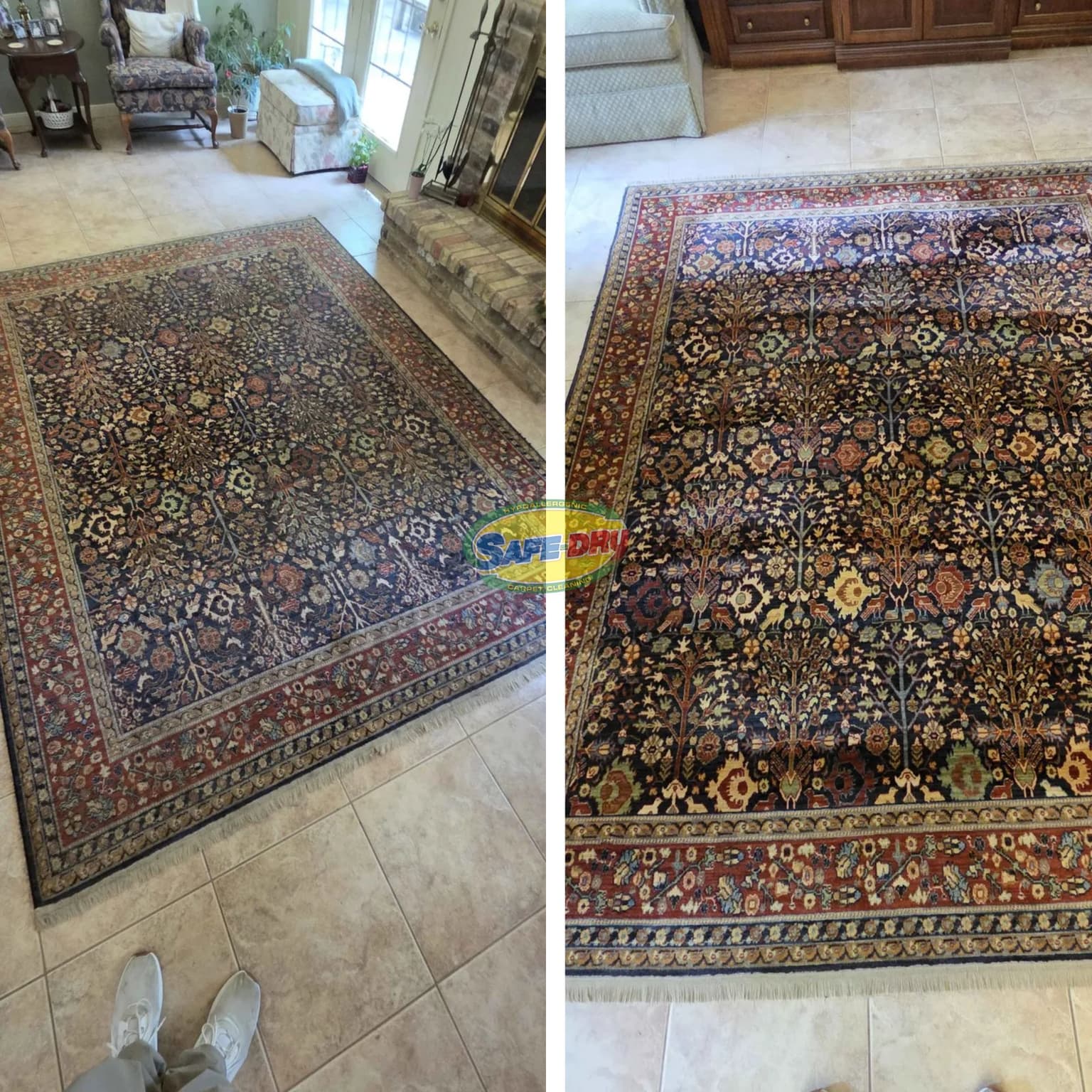
Most rugs in most homes are better off cleaned where they lie, and I'll argue that with anyone. We clean them right in your home, with no pickup, using the same soap-free approach we use on carpet, so nothing sticky stays behind and the rug dries quickly. Our area rug cleaning covers everyday rugs. For heirloom, hand-knotted, and Oriental pieces we check the fiber and how stable the dyes are first, and the Oriental rug page explains how that works.
Dye that has already bled into the neighboring colors is very hard to reverse, and some rugs with a history of heavy pet accidents have damage in the foundation that cleaning can improve but can't undo. We'll tell you that before we start, so you can decide if the rug is worth it to you.
Between cleanings
Vacuum regularly with gentle suction, and turn the brush roll off on delicate or fringed rugs. Keep the fringe out of the vacuum. Vacuum the back of sturdy rugs a few times a year, since grit works through and grinds at the foundation. Rotate rugs every few months so sun and traffic even out, and use a pad that's safe for your floor. Keep a stack of white towels near the dining room.
A rug by the sofa or the front door that sees daily traffic usually wants a professional clean once or twice a year. A decorative rug in the guest room can go much longer. Price depends on size, material, soil level, and any odor work, and our current coupon takes $25 off. We can often do rugs and carpet in the same visit.
If a spill just happened and you're not sure what to do, call 803-310-3848. Tell us what spilled and what the rug is made of, and we'll talk you through the next ten minutes.