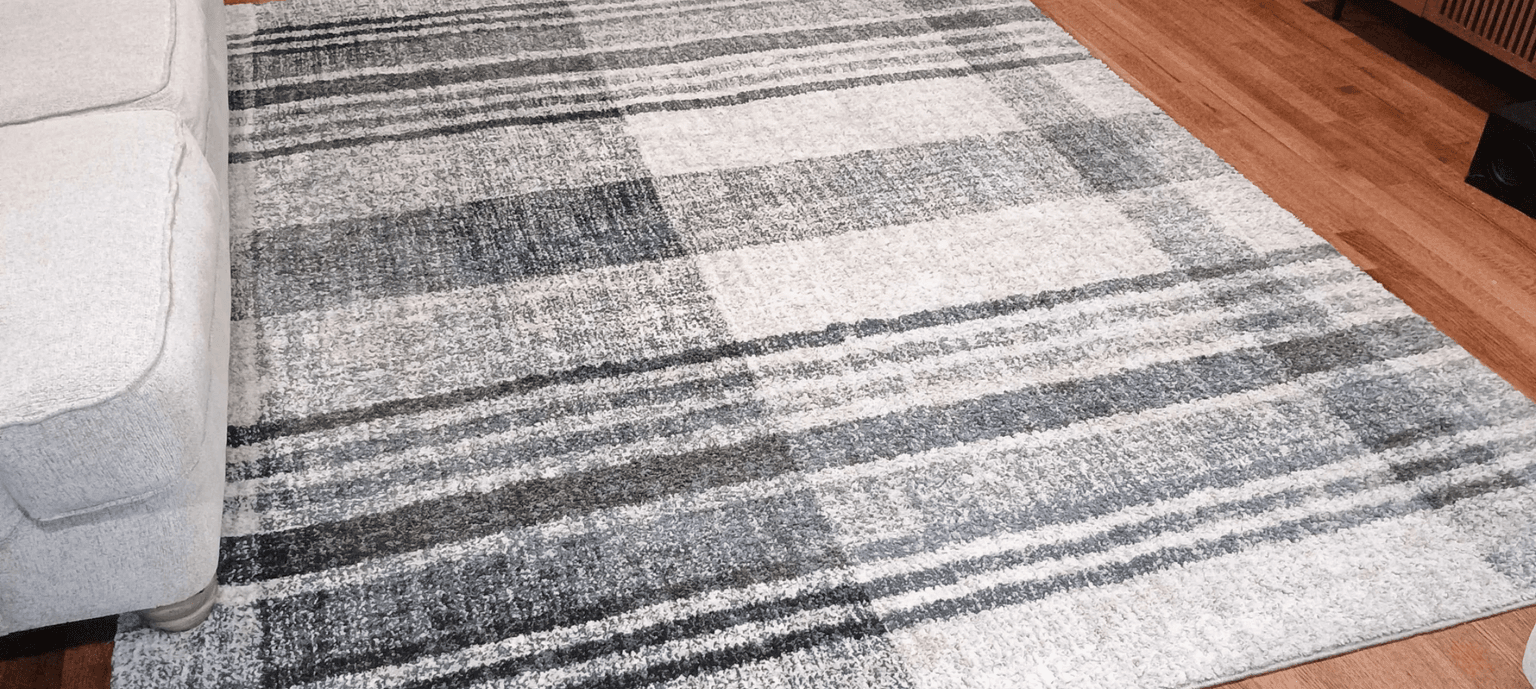
Your rug stays home. We clean area rugs right where they lie, on your floor, in your living room, so there's no van ride across town, no claim ticket, and no three-week gap where the coffee table sits on bare wood. By the time the kids are home from school, the rug is back in use.
I think pickup service is overrated for most household rugs. A plant makes sense for a badly damaged heirloom. For the wool rug in the den or the jute runner in the hall, hauling it away mostly buys you a bare floor and a longer bill.
What an area rug collects around here
Every spring the Midlands turns yellow. Pine pollen coats the cars, the porch, the dog, and eventually the rug by the back door. It works its way down into the pile, and a vacuum only gets the top layer. Add dander, crumbs, and the fine grit that comes in on shoes, and a rug that looks fine from standing height can be holding a surprising load.
That grit shortens a rug's life. Under foot traffic it grinds at the base of each fiber like sandpaper. Colors go flat, the pile crushes in the walking path, and wool loses its bounce. A professional cleaning every year or so pulls it out before the damage sticks.
We clean just about every fiber you'll find on a Columbia floor:
- Wool, from machine-made to hand-tufted
- Silk and silk blends
- Cotton flatweaves and braided rugs
- Jute and other plant fibers
- Nylon, olefin, and other synthetics
A jute rug off a Lake Murray porch and a wool rug from a formal dining room don't want the same treatment, and they don't get it.
How the cleaning goes
It starts on your floor with you standing next to it. The tech checks the fiber, the age, the backing, and if the dye looks like it might bleed, then points out the stains, the odor spots, and the worn edges. You'll hear the plan and the price before anything gets wet.
Dry soil comes out next. Rugs hold a lot of it, and adding moisture to dry soil just makes mud, so we loosen and remove as much as we can with tools made for the job. It's the dull step. It also decides how good the rug looks at the end.
Then the spots. Pet accidents, spilled juice, the mystery mark from a birthday party: each gets a pre-treatment matched to the stain, gentle enough that a red border sitting next to a cream field stays two separate colors.
The main clean uses about 90% less water than a steam cleaner. Our solution works into the pile, lifts soil away from each fiber, and gets pulled back out with the dirt. The rug never gets soaked, so the backing holds its shape, the colors stay put, and the hardwood or tile underneath stays dry. In a Columbia summer, when a wet rug can take days to dry and start to smell, keeping the water down is most of the job. Odors get neutralized at the source in the same visit, along with dust mites, dander, and pollen, and nothing perfumed gets sprayed on top.
Last, we groom the fibers so the pile lies right and dries evenly, and we look it over together. If you're not happy, we make it right.
Some rugs need more than this. A hand-knotted Persian or an antique piece gets extra steps, covered on our Oriental rug cleaning page. A pet stain that soaked through the backing gets the enzyme from our pet stain treatment, which can ride along on the same visit. And if a rug has broken warps or dye that runs in our test, we'll say so and stop. Cleaning won't fix structural damage.
Delicate fibers, kids, and the dog
Soaking is where most rug damage happens. Shrinking, dye bleeding into the field, fibers browning as they dry, and mildew in the foundation all trace back to too much water, and every one of them is avoidable. On silk or older wool we slow down, test more spots, and keep the moisture lower still. If a test spot so much as blushes, that rug gets a different plan or no cleaning at all.
The products themselves are biodegradable and non-toxic, with no soap to leave a tacky film and no heavy fragrance hanging in the room afterward. A toddler can be back on the rug the same afternoon. So can the dog, though we'd suggest waiting until the pile feels dry under your palm, because a damp rug is exactly where a muddy paw leaves its best print.
Rugs over wood, tile, and wall-to-wall carpet
Where the rug sits changes how we set up. A rug on hardwood is the most common job in Columbia, and the wood is what people worry about. We keep moisture low enough that nothing soaks through the backing, and a thin cotton or jute rug gets an even lighter hand.
Tile is easier on the floor side, but it's slick, so we make sure the rug is dry before anyone walks on it in socks. Rugs over wall-to-wall carpet, which you see a lot in bedrooms and dens, hold more dirt than you'd expect because the carpet underneath gives grit a soft place to settle. We work those carefully so the carpet below doesn't end up with a damp rectangle.
Timing, cost, and what you can do yourself
Every 12 to 18 months suits most homes. A rug under a busy family room with pets and kids might want it yearly; a guest room rug can go longer. A few signs it's due: the middle looks flatter than the edges, the traffic path has a gray cast you can't vacuum away, the rug smells musty on humid days, or a spot you treated came back darker.
That last one is usually store-bought spray. Most of them leave soap behind, and soap is what makes a spot return darker than it started. Blot fresh spills with a white towel and cool water, vacuum regularly, and flip the rug end to end a couple of times a year so wear spreads evenly.
Rug cleaning is $25 off right now through our coupons page. We cover Columbia and the Midlands on both sides of the rivers, around the clock; call 803-310-3848 or book a rug cleaning online.