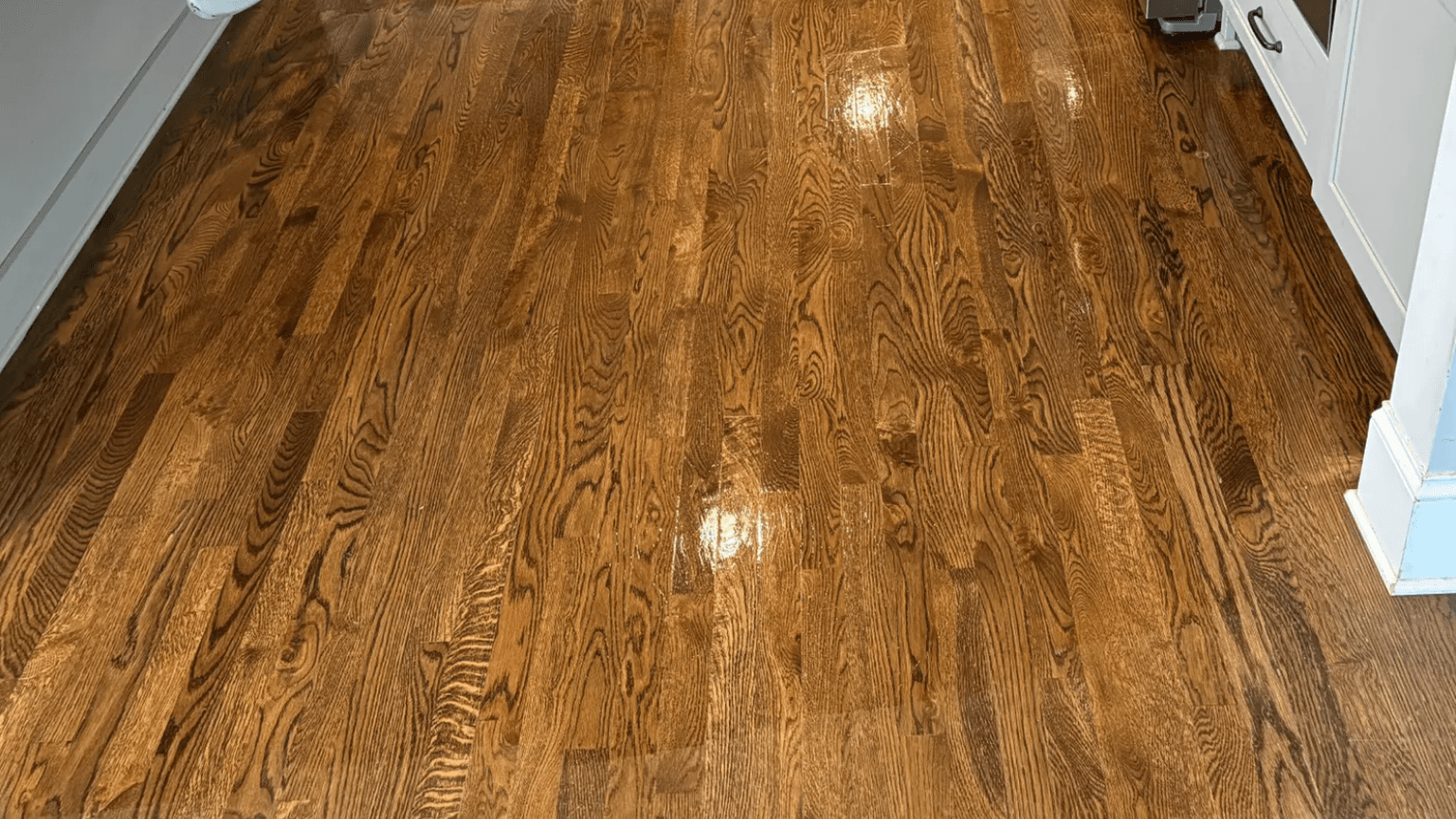
Before you pay anyone to sand a floor, wipe a small patch of it with a damp white cloth. If the cloth comes up gray or brown and the spot you wiped looks brighter than the boards around it, the finish is fine. It's just dirty, and a dirty floor is a much cheaper problem than a worn-out one.
We hear from a lot of Columbia homeowners who already have a quote for sanding and refinishing, only to find out the finish under the grime was sound all along. Safe-Dry® of Columbia cleans hardwood with a pH-neutral solution and very little water. We take off the film of old cleaner, grit, and everyday buildup that makes wood look dull, without soaking the boards or bringing a sander in the door. Most floors are ready to walk on 30 to 60 minutes after we finish.
Why good floors start looking bad
Most of the dull floors we see got that way slowly, one mopping at a time.
Plenty of popular floor cleaners leave something behind: a little wax, a little oil soap, a "shine booster." Each layer looks fine the day it goes down. Stack a few years of them and you get a hazy coating that holds onto dirt and shows every footprint, which is why a floor can look worse right after it's been cleaned. My opinion, after a lot of these jobs: throw out the oil soap and the "restorer" bottles unless your floor's manufacturer specifically calls for them. They cause more dull floors in this town than foot traffic does.
Then there's grit. Sand and fine dirt act like sandpaper under shoes and chair legs, and every spring the Midlands adds a coat of pine pollen that gets tracked in by the pound. It settles into the seams between boards and into the grain of hand-scraped floors, where a dust mop skips right over it.
And there's water. Columbia summers already push a lot of moisture into a house, and a wet mop adds more right at the seams. Over time that leads to cupping, raised edges, and gray staining along the joints. In this climate, keeping water off the wood matters more than which cleaner you pick.
What we do, and what we won't
The tech looks at the wood, the finish, the traffic paths, and any damage that's already there, like deep scratches, worn spots, or water marks. Finishes differ, so this look decides how we clean. We'll move lightweight furniture if you'd like the whole floor done.
Loose grit comes up first, swept and vacuumed so nothing gets dragged across the finish once the machine starts. Then our hardwood solution goes down in a measured amount. It dissolves old cleaner residue, grease, and ground-in dirt and leaves the protective finish alone. Our equipment works it across the floor and into the grooves, and the loosened residue gets extracted right behind it. That immediate pickup is what leaves the floor without streaks or a sticky film, and it keeps moisture out of the joints. There's no bucket of gray water being pushed around the room.
When it's dry, we look at it together in good light, and you point out anything that needs another pass. The same no-charge guarantee we put on carpet covers wood.
It's a quiet job compared to sanding. No dust cloud, no fumes to air out, no moving out of the house for three days while finish cures. Most people go about their morning in another room.
We clean finished solid hardwood, engineered wood, and factory-finished plank, which covers most of the wood in Columbia homes, from older oak in Forest Acres and Shandon to engineered plank in newer builds out past Harbison. Oil and wax finishes need a different touch; the tech will identify yours and adjust, or tell you plainly if it's one we'd pass on. Bare, unfinished wood we will pass on, because any liquid cleaner can stain raw boards.
Here's the straight talk on results. Cleaning removes buildup, surface scuffs, and the haze over the grain, and light scratches often fade once the dirt in them is gone. Deep scratches, gouges, and finish worn through to bare wood won't change. That area needs refinishing, and we don't sand or refinish. What we can do is get the floor clean enough that you can tell if it really needs that work. A lot of the time it doesn't.
The solution is non-toxic with no heavy scent, so children and dogs can use the floor again as soon as it's dry, and getting pollen and pet dander out of the seams helps anyone with allergies. For more on caring for wood between visits, including which common products slowly damage a finish, our sister site Hardwood Restore covers it in depth.
Rooms, stairs, and timing
We clean wood wherever it shows up: kitchens, living and dining rooms, hallways and entries, home offices, and stairs. We also do commercial wood floors in offices, lobbies, and retail spaces. A typical home takes a few hours, depending on square footage and how much buildup is on the boards.
Kitchens are usually the worst room in the house, and it's not close. Cooking grease settles on the floor as a thin film you can't see, then everything that drops sticks to it: flour, crumbs, the dog's water that sloshes over the bowl every morning. In front of the sink and the stove you'll often find a darker patch that people assume is worn finish. Most of the time it's grease and grime, and it lifts.
Entries come second. Shoes carry pollen and sand straight in, and the first six feet inside the door take the beating.
Between visits, dust mop or vacuum on the hard-floor setting (no beater bar) a couple of times a week, especially near the doors in pollen season. Put felt pads on chair and table legs and a mat at every entry. When you do clean, use a barely damp microfiber pad and a pH-neutral cleaner. One or two professional cleanings a year keep buildup from getting ahead of you, more in a busy kitchen or hallway.
Right now hardwood cleaning carries $50 off, listed on our coupons page. Call 803-310-3848, any hour, or schedule online. Got a rug sitting on that floor? We can clean it in place the same visit; see area rug cleaning.
Stairs take longer than you'd guess. Every tread and riser gets done by hand-guided equipment, and they're often the dirtiest wood in the house, with a dark path worn right down the middle. If you have a dog, shut it out of the stairwell until the treads are dry. Wet paws on a fresh floor leave a trail you'll be looking at all week.