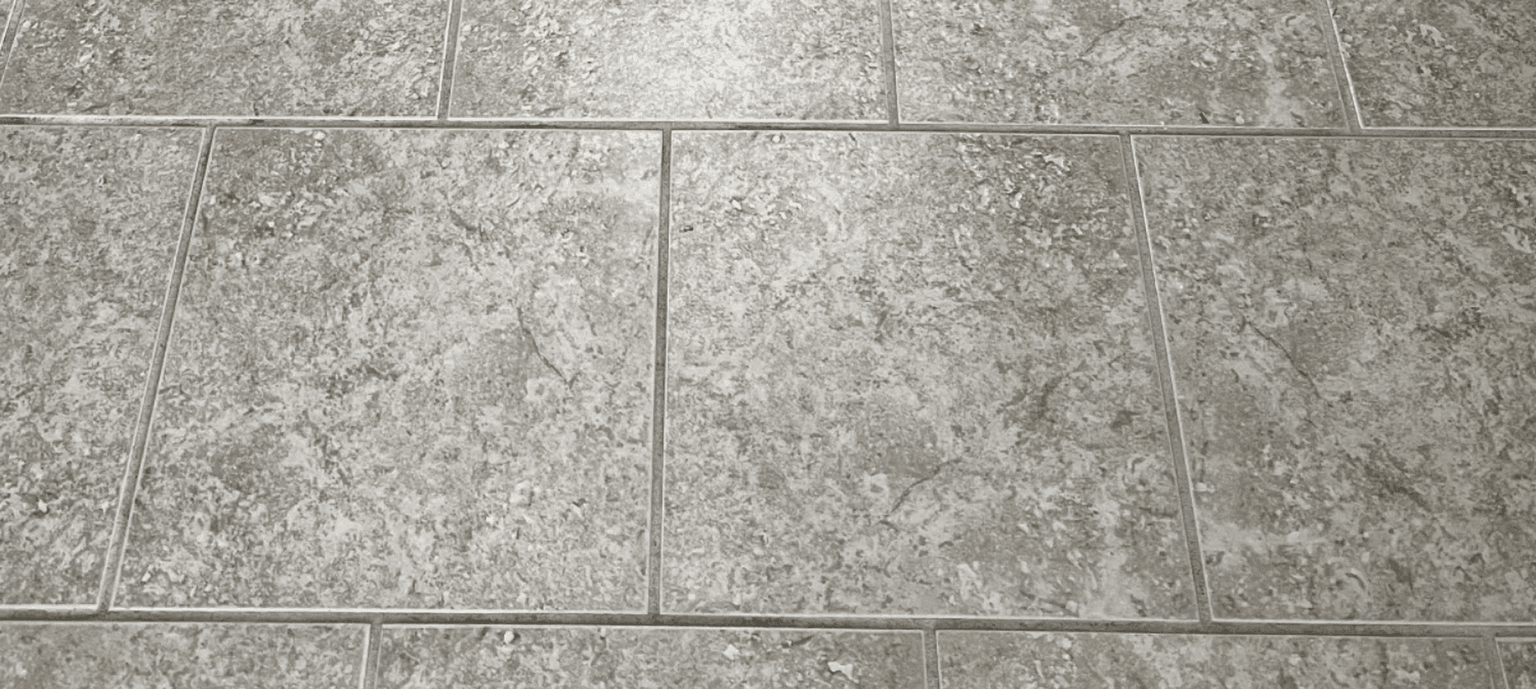
Grout is basically sand and cement, and it drinks. Every time you mop, a little of that dirty mop water soaks into the lines between your tiles and stays there. Give it a few years and grout that went in light gray or tan turns the color of a creek bank. The tile might still look decent. The lines around it tell the real story.
Safe-Dry® of Columbia cleans tile and grout with a machine buffer. It scrubs the tile face and works down into the grout lines to lift out the buildup a mop only moves around, with no harsh acids and no flooding the floor.
Why mopping never quite gets there
A mop is great at spreading things. It picks up some soil, mixes it with water, and pushes it into the lowest point on the floor, which is the grout. Kitchens get grease from cooking. Bathrooms get soap scum and body oils. Entryways and mudrooms get red clay, which around here is its own special problem: it's fine, it stains, and it settles into grout like it was made for it.
Midlands humidity adds another layer. Grout in bathrooms and laundry rooms stays a little damp, and damp grout is where mildew grows. That's the black speckling along the base of a shower or around a toilet.
None of this means your floor is ruined. In most homes the grout underneath is perfectly sound. It's just buried.
How the buffer method works
We start by looking at the floor with you. Ceramic, porcelain, marble, travertine, slate? Where's the worst of it? Mildew, grease, old wax? That decides which solution we use and how hard the machine can work. Then we sweep and clear loose debris so the buffer spends its time on embedded soil and not crumbs.
A pre-treatment goes down next, made to break down grease, soil, and stains. It soaks into the pores of the grout and loosens buildup that's been sitting there for years. Matched to your floor type, it won't etch or dull the tile.
The buffer
This is the step that matters. Our rotary buffer runs a brush and pad setup that scrubs the tile face and reaches into the grout lines at the same time. The mechanical action does the heavy lifting, breaking buildup loose from the grout pores, and we pull the loosened grime off the floor right away so it doesn't settle back in.
Because the machine does the work, we don't need strong chemicals or much water. The floor stays only lightly damp, which keeps moisture out of the subfloor and gets you walking on it again quickly.
Rinse and dry
We remove any leftover residue so the floor isn't sticky or slick, then buff the surface dry and look at it with you. You'll see the difference in the lines right away. If something isn't right, we fix it on the spot, and if you're still not satisfied, you don't pay.
Where we clean tile, and stone
Kitchens and breakfast nooks, living and dining rooms, bathrooms and shower floors, hallways, mudrooms, laundry rooms, tiled garage floors, and commercial spaces like lobbies and office break rooms. We see a lot of kitchens around St. Andrews and Harbison where the original tile is still in good shape but the grout hasn't been truly clean in a decade. Lake Murray homes are another regular, with tile entries that catch wet feet and flip-flops from the dock all summer.
Porcelain and ceramic are tough. They'll take a firm brush and a stronger cleaner without complaint. Marble, travertine, and limestone are softer and react to acid, which means a vinegar-and-water mop or a lime-scale remover can etch dull spots right into the surface. I'd go further: nobody with a stone floor should keep vinegar under the sink for mopping. It's the most common damage we see on stone, and it's permanent.
On stone we switch to stone-safe solutions and lighter pads, and we test a low-visibility corner first. Slate is layered, and aggressive scrubbing can flake the top, so it gets a gentler hand too. Not sure what your floor is made of? That's fine. We can usually tell by looking.
Other signs are easy to spot once you look. The floor looks dirty ten minutes after you mop it. Shower grout has dark speckles that return a week after you scrub them. The kitchen feels faintly tacky in socks, usually from years of cleaner that never got rinsed. Any of those means the buildup has gone past what a mop and a bucket can reach, and more scrubbing on your knees mostly wears out your knees.
What to expect, and what we don't do
Most grout cleans up dramatically, often several shades lighter. Lines stained by dye, rust, or long-term water damage may improve without going all the way back to their original color, and we'll point those out before we start.
Cracked, crumbling, or missing grout is a repair issue. Cleaning won't fix it, and we'll tell you if we see it. We also don't put coatings or color treatments on afterward. Our job is getting the buildup out.
For more on how professional tile cleaning works and how often different rooms need it, our tile cleaning specialists at Tile Done Right have a full guide.
How often, what it costs, and a test you can do today
Every 12 to 18 months keeps most floors from getting away from you. Kitchens and bathrooms, with grease and moisture every day, may want it sooner. In between, use a pH-neutral cleaner, change your mop water often, and put a mat at the yard door so less clay makes it inside.
Tile cleaning is $45 off right now on our coupons page. Call 803-310-3848 at any hour or use the online booking page, and if the carpet in the next room needs attention too, we can do both on one trip; see carpet cleaning.
Here's the test. Find grout that traffic never touches, like under the edge of a cabinet toe-kick or behind the toilet, and compare it to the grout in the middle of the kitchen floor. If they look like two different colors, the difference is dirt, and it'll come out.