There are two ways to spoil a hardwood floor with cleaning. One is going at it too hard: a soaking mop, steam, a strong cleaner, a scrubby pad. The other is being so careful that grit, oils, and old product just stay put. Both end in a dull floor.
Good hardwood care sits between those, and it gets tested hard in the houses around our shop in 29210, where kids, dogs, work boots, and kitchen spills all land on the same boards.
The finish is what you're protecting
Most wood floors have a clear protective coat over the wood, and nearly every cleaning decision comes down to keeping that coat intact. Once it's scratched through or worn thin, the wood underneath takes on moisture and dirt.
Grit is the slow threat, and honestly the biggest one. Spills and pets get the blame, but the sand and soil that ride in on shoes get walked over hundreds of times a day, and over months they sand the finish into dull lanes. One grain hardly matters. Ten thousand footsteps do. That's why dry cleaning always comes first, before any moisture touches the floor. Go dry first and the dirt never turns into mud, and you aren't dragging grit across the finish while you "clean."
What the flooring industry says to avoid
The National Wood Flooring Association publishes most of the maintenance guidance for wood floors, and it's consistent on a few points.
Wet mops. Water works into seams, cracks, and any spot where the finish is worn. The NWFA warns against wet mopping and against letting water stand, since standing water can lead to cupping and splitting. A lot of people mop hardwood the way they mop tile. Tile can take it. Wood can't.
Steam. Steam mops get sold for all hard floors, but they push heat and water vapor into the surface at the same time, and that vapor finds its way into seams. The NWFA advises against them on wood.
Vinegar. It's cheap and "natural," so it shows up in every DIY post. It's also acidic, and NWFA guidance specifically says to keep it off wood floor finishes.
If you have your flooring manufacturer's care instructions, follow those. If you don't, go with less moisture and a cleaner made for your type of floor. The EPA's Safer Choice program lists household products that meet its ingredient standard, which is a decent place to start.
A routine that takes a few minutes a day
A microfiber dust mop leaned somewhere you'll see it every morning does more for hardwood than any product in the cleaning aisle. The routine only sticks if the tools are close, so set up once. Dust mop in the hall closet. A couple of microfiber cloths and a bottle of pH-neutral hardwood cleaner under the kitchen sink. A towel on a hook by the back door for paws.
Skip most of the rest of the aisle. Straw brooms scratch. Sponges and cotton string mops leave water and lint behind. Oil soaps and dish soap leave a film that holds dust, and in our humidity that film turns tacky.
In the morning, run the dust mop through the main rooms. It takes three or four minutes. Start at the far wall, work toward the door, and reach under the front edge of the couch. Then look at the entry, because tiny pebbles collect just inside the door and they scratch worst. Get them while they're all in one place.
During the day, handle spills the moment they happen. Blot with a dry cloth; if something sticky is left, mist a little hardwood cleaner onto the cloth (never onto the floor), wipe, then dry the spot. Standing water does damage even in small amounts, like condensation off an iced tea glass or a splash from the dog bowl. Wipe paws when the dogs come in, since morning dew and afternoon storms mean wet feet, and wet feet plus yard dirt leave streaks. Scuffs from shoes or chair legs usually buff out with a soft cloth and light pressure.
Shoes off helps more than anything you can buy. A small bench by the door does it. Where that won't happen, a good mat outside and a breathable one inside catch most of the grit.
In the evening, one more dust-mop pass in the rooms you used, and a glance at the pet bowls. Dust left overnight settles and clings when the air is muggy.
Once a week, vacuum along baseboards and under furniture on the hard-floor setting with the brush roll off. Check the felt pads under chairs and swap any that have picked up grit. Lift furniture when you move it. Trade rubber-backed mats for breathable ones on a rug pad, since rubber traps moisture against the wood. And through the summer, keep the AC steady or run a dehumidifier; wood swells when the air is wet and shrinks when it dries out, and Columbia swings hard between the two.
Where cleaning stops
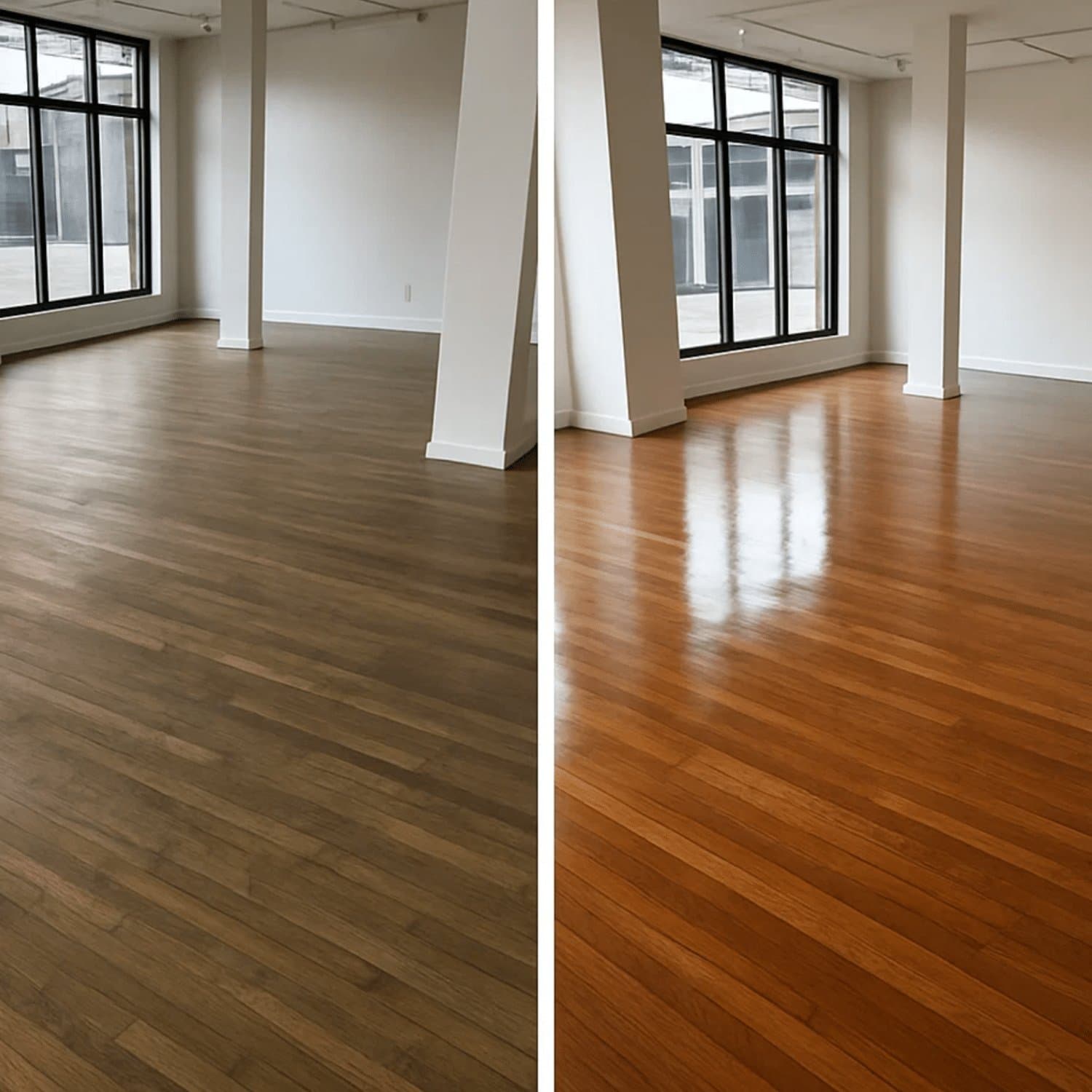
Even a well-kept floor slowly builds up a film of oils and old product that dust-mopping won't touch. We see a cycle constantly. The floor looks a little dull, so it gets mopped with more cleaner than last time. The extra dries into a thin film that catches dust and shows footprints, so the floor looks dull again sooner and gets still more cleaner. After a year or two there's a haze, and the owner assumes the finish is shot. Often it's fine, just buried. Polish follows the same logic: shine over a residue-coated floor goes on uneven and builds up.
Pet odor sprays are another trap. Most are made for carpet and fabric, and if urine has gotten between the boards, no surface product reaches it.
Cleaning and refinishing are different jobs, and mixing them up costs people money in both directions. Cleaning removes soil and residue from the surface. Refinishing rebuilds the protective coat and sometimes sands the wood. Our hardwood floor cleaning is strictly the first kind: a pH-neutral clean with very little water that works on solid or engineered boards, factory-finished or finished in place. We don't sand and we don't refinish. Scratches deep enough to catch a fingernail, gray bare wood, raised board edges, and water-damaged spots are refinishing problems, and we'll tell you plainly when that's what you're looking at.
Signs a professional clean will help: haze that comes back right after dusting, sticky patches by the stove, dark paths between the kitchen and the living room. For most homes that means a deep clean every 6 to 12 months, and the $50 hardwood coupon applies.
You'll get a better result if the tech knows what's been used on the floor before. Wax, oil soap, polishes, and "restorer" products all change how a floor responds. Jot those down, along with a rough square footage, and have the list handy when you call 803-310-3848. After we finish, keep the ceiling fan or AC running for a while. On a humid afternoon an open window lets in more moisture than it lets out.