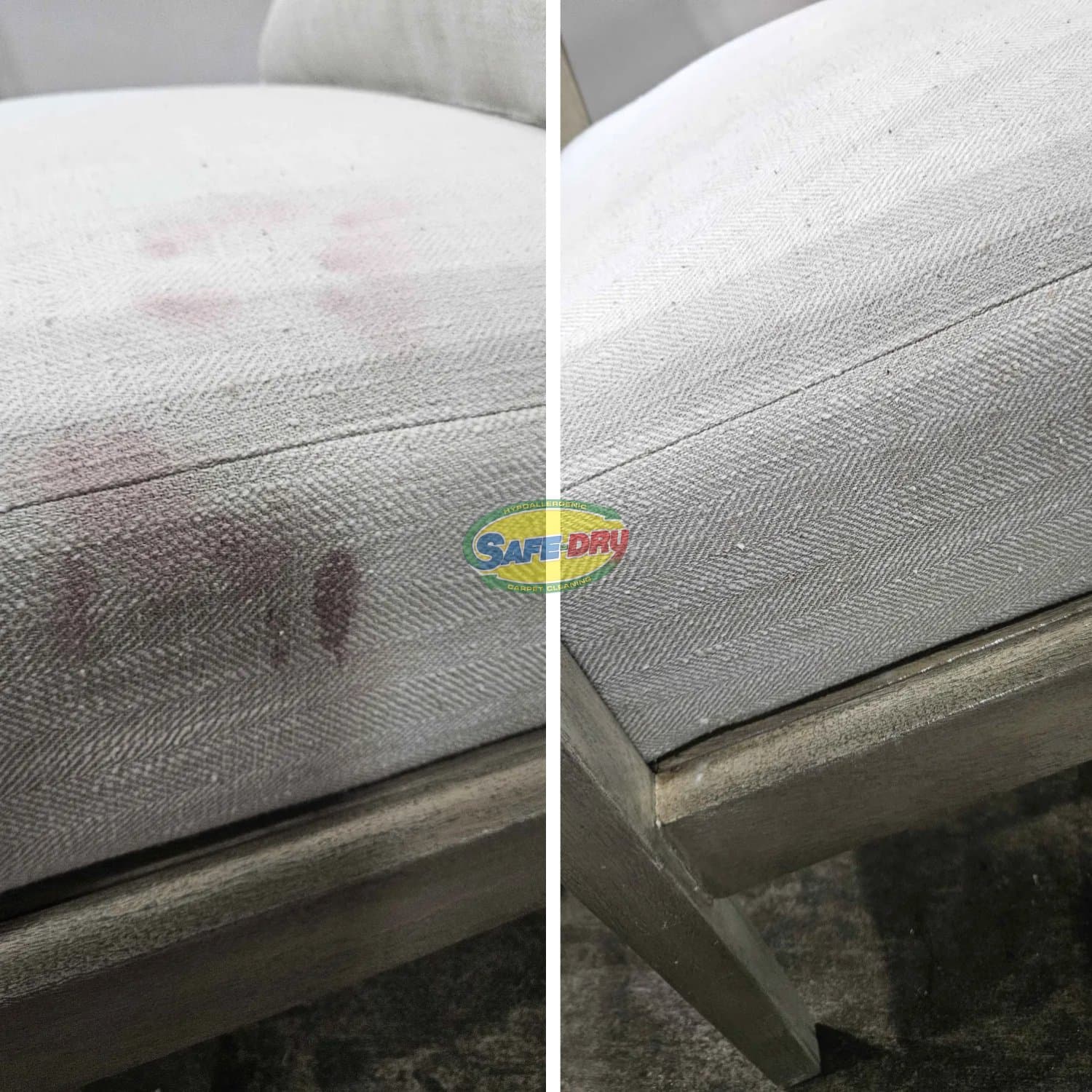
You set a sweating glass of iced tea on the arm of the sofa for five minutes, and two days later there's a pale brown circle with a crisp edge that wasn't there before. Plain water did that. It feels unfair, and it's one of the most common furniture complaints we hear in Columbia.
What a water ring actually is
Water rarely stains upholstery on its own. What it does is travel. When a spot gets wet, moisture wicks outward through the fibers and carries along whatever was already sitting in the fabric: dust, skin oil, old detergent from a past spot cleaning, minerals from tap water. As the wet patch dries, all of that gets dumped at the outer edge. The ring is soil the couch was already holding, now concentrated into a line.
That explains a few things people find confusing. Older furniture rings more easily than new pieces because it holds more buildup. Light fabrics and nubby textured weaves show it worst. And Midlands humidity makes it harder, because a slow-drying spot gives residue more time to migrate before it settles.
The usual starting points are condensation from cold drinks, a damp dog coming in off the porch, a kid's spill wiped with a soaking towel, and the classic: a store-bought spray used heavily in the center of a spot and nowhere else.
Check the cleaning code first
Look under the cushion or on the deck for the care tag. It'll carry a letter.
- W: water-based cleaning is fine.
- S: solvent only. Keep water off it.
- WS: either one works.
- X: vacuum only. Anything wet belongs to a professional.
If your tag reads S or X, stop here. Water-based home fixes on those fabrics can shrink, bleed, or leave a bigger mark than the one you started with, and our upholstery cleaning crew can match the method to the fiber. Whatever the code, test on a hidden spot on the back or underside and let it dry completely before you judge.
The fix, step by step
The trick is counterintuitive. You treat the whole panel, not the ring. A ring is an uneven drying problem, so the cure is even moisture across the entire cushion face, seam to seam.
- Vacuum the area and a good margin around it with a soft brush tool. Loose dust turns into mud the moment you add water.
- Dampen a white microfiber cloth with distilled water. Tap water brings its own minerals, which is the last thing you want. Blot the entire cushion face or panel lightly until it's evenly damp, never soaked.
- Blot with a dry white cloth. No scrubbing. Rubbing roughs up the pile and pushes residue into a new ring.
- If the mark is still there, stir a drop of mild dish soap into a cup of distilled water, wet a cloth with it (not the fabric), and blot the whole section again. Use less than you think you need.
- Go back over the panel with a cloth barely dampened in plain distilled water to pick up the soap. Skipping this rinse is how a lot of rings reappear a week later.
- Point a fan at it. Moving air dries the panel evenly and fast. Leave the hair dryer in the drawer unless the manufacturer says heat is okay.
- Once dry, brush the nap gently with a soft upholstery brush to lift flattened fibers.
A fresh ring from clean water on a W-code fabric often fades after one round. Some take two. Patience beats pressure here.
A lot of the rings we get called about grew during the first attempt. The usual culprits: cleaning only the middle of the mark, which leaves a darker halo; soaking the fabric so moisture reaches the foam and takes a day to dry; grabbing a colored towel that bleeds dye onto a beige chair; scrubbing until the fabric fuzzes; and trying a vinegar or baking soda hack from a video filmed on somebody else's couch. Too much soap is the sneaky one. It feels clean when it dries, then attracts dirt so that spot grays out faster than the rest of the sofa.
When to hand it off, and how to stop the next one
Sometimes the ring is only the visible part of a bigger problem. If the stain spread after you worked on it, if it's been there for months, if the tag says S or X, or if there's odor or pet residue mixed in, spot treatment usually won't give you an even result. Same goes for vintage or expensive pieces, and for any cushion that still feels damp inside.
At that point, stop chasing the one mark and get the whole piece cleaned. We clean every cushion face and panel with the same light mist and no soap, so the one you were worried about comes out matching its neighbors, and you can sit on it by dinner. If a pet caused the ring, an enzyme urine treatment goes after what soaked in underneath. One thing we won't promise: a ring on silk or on a sofa that's been spot-cleaned a dozen times may lighten a lot and still leave a faint line. We'll tell you that before we start.
Coasters and a tray on the ottoman solve half of it. Washable throws on the arms help in homes where people eat and drink on the couch. Vacuum the upholstery when you vacuum the floors, since less loose soil means less for a spill to carry. And keep a jug of distilled water with two white microfiber cloths in the hall closet so the next spill gets blotted within a minute.
Got a ring that won't budge? Call 803-310-3848, tell us the letter on the tag and how long the mark has been there, and we'll give you a straight answer: home fix, or a visit.