Hiring someone to clean your furniture is a good call. Hiring the wrong someone is how a linen sofa ends up with tide lines across every cushion, or a zip-off cover comes back an inch too small to go on again.
You'll pick better if you know what you're paying to get out, so that's where we'll start.
Why the arms go dark first
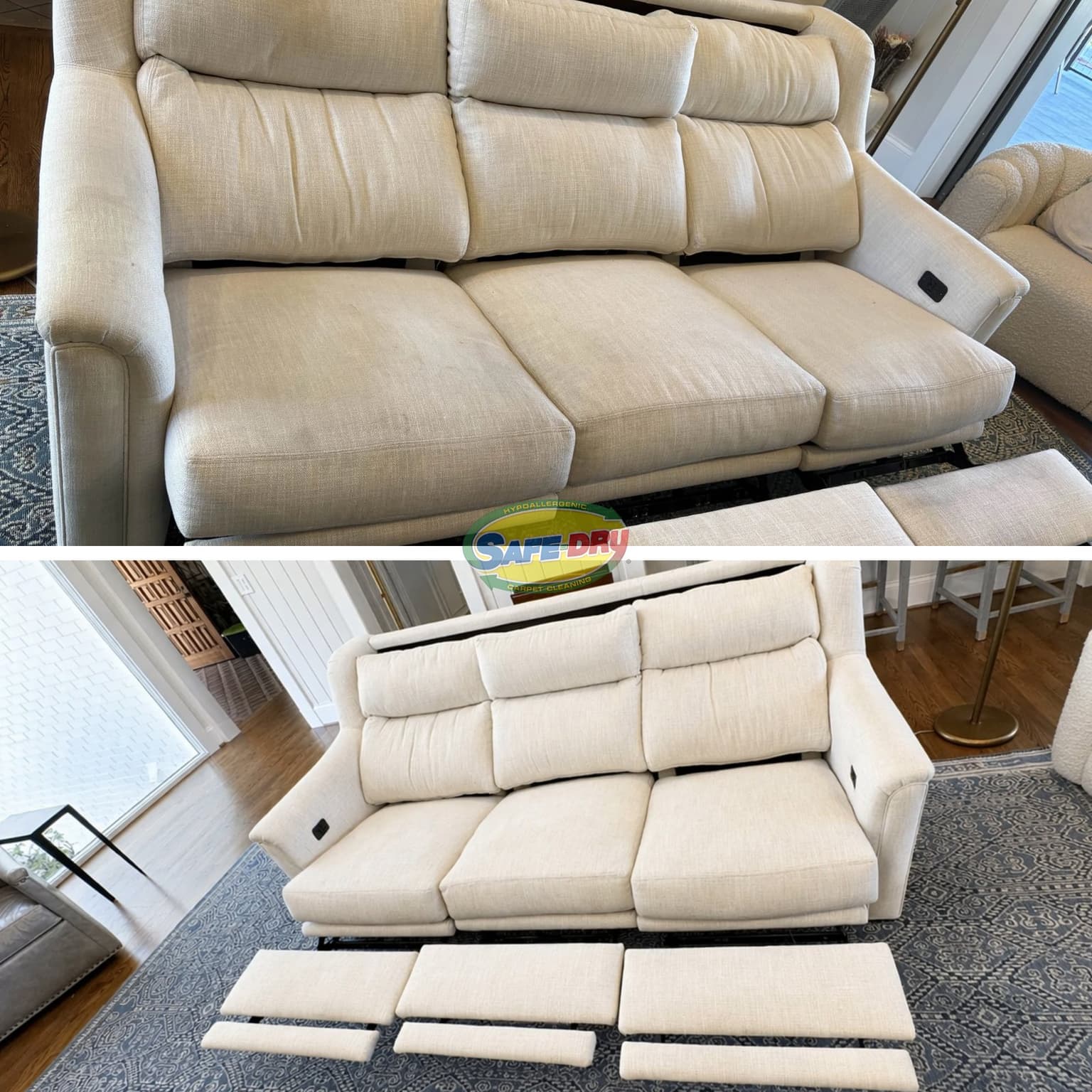
Nobody's couch gets dirty on a particular day. It happens one sit at a time. Hands and forearms leave skin oil on the armrests in exactly the same spot every night, and oil holds dust. Jeans rub the front edge of the seat cushions. Heads rest in the same place on the back. The dog picks one corner and sticks with it. Over a year or two those contact points change how light bounces off the fabric, and you get that flat, grayish patch that looks dirty even though there's no stain you can point to.
Columbia speeds it up. Pollen season drops a fine yellow layer on every soft surface in the house, and summer humidity makes body oil and dust cling harder.
Vacuuming and wiping take care of what's loose. They don't reach oil that's worked into the weave. Most store upholstery sprays make it worse in slow motion: they dry clear, leave a film, the film grabs dirt, and the arm looks better for a week before it grays back up. Soaking the fabric causes a different problem, pushing soil deeper and drying into a ring.
So a real cleaning has to pull out what's inside the fibers without flooding the cushion. Keep that in mind when you start calling around.
What to ask, and when to hang up
Start with experience. How long has the company been cleaning upholstery, and what do reviews say about furniture jobs specifically? Glowing carpet reviews tell you very little about how they'll treat a velvet chair. Look for comments about fabric coming back soft, colors staying put, and cushions dry by evening.
Then ask how they handle different fabrics. Cotton, linen, microfiber, polyester blends, and velvet all react differently to water and cleaning chemistry. Every sofa has a cleaning code on its tag. W means water-based cleaning is fine. S means solvent only, and a water-based product can leave rings on it. X means vacuum only, which rules out liquid of any kind from anybody, us included. A decent technician reads that tag, tests a hidden spot for colorfastness, and adjusts before touching the whole piece. If a company tells you they clean everything the same way, keep looking.
Ask what goes on the fabric and how long it takes to dry. Cushions that stay damp overnight in a July Columbia house can start to smell, and the foam inside is slow to give up water.
Notice how they treat your time on the phone, too. A company that confirms the appointment, shows up when it said, and explains what it's about to do is usually careful with your furniture as well.
If a company won't do a test spot, keep them out of the house. We'd rather lose a job than guess on a fabric, and anyone who sprays a whole sofa without checking how it reacts is gambling with your money.
The other red flags:
- A phone price that jumps once they see the couch, or pressure to buy add-ons you never asked about.
- A plan that involves soaking the cushions.
- A strong perfume left behind. That usually means soap or fragrance is sitting in the fabric, and it will pull in dirt.
- Fuzzy answers about drying time or insurance.
If you only have two minutes on the phone, ask four things: how long they've been cleaning upholstery, what they do with fabric marked S or X, how long you'll be off the furniture, and what happens if you're unhappy. A company that knows its work answers all four without getting defensive.
How we clean it, and what it costs
Our tech checks the fabric and the tag first, then pre-treats the arms, seat fronts, and any spot you point at, to loosen the settled oil. The cleaning solution goes on in a measured amount, enough to lift soil without soaking the cushion, and the loosened dirt is pulled out of the fibers. Stains get handled one at a time. There's no soap in what we use, so nothing sticky stays behind, and most pieces are ready to sit on again before dinner.
Pet urine is where we sometimes come up short. It moves fast through upholstery into the cushion foam and the padding under it, and a spot the size of a coaster on top can be much bigger inside. We treat those with our pet odor work, which goes after the source, and older accidents often need more than one pass. Sometimes the foam has taken so much that replacing the cushion insert is the real fix, and we'll say so.
Price depends on the size of the piece, the fabric, how much buildup and staining it has, and whether pet treatment is involved. The current coupon takes $25 off upholstery, and a quick call gets you an actual number. Most households do fine with a deep clean every 6 to 12 months, and a couch the dog sleeps on every day may want the shorter end.
Between cleanings, rotate the cushions every couple of weeks so one seat doesn't absorb all the wear, vacuum the seams with a soft brush, and lay a throw over the arms or the dog's corner. Blot spills straight away. Press and lift; don't rub.
Full details are on our upholstery cleaning page, and you can add a rug cleaning to the same visit since we do rugs right there in your living room. Booking online takes a couple of minutes. The night before we come, lift a seat cushion and snap a photo of the tag underneath so it's ready when the tech asks. It saves five minutes of somebody lying on your floor with a flashlight.