
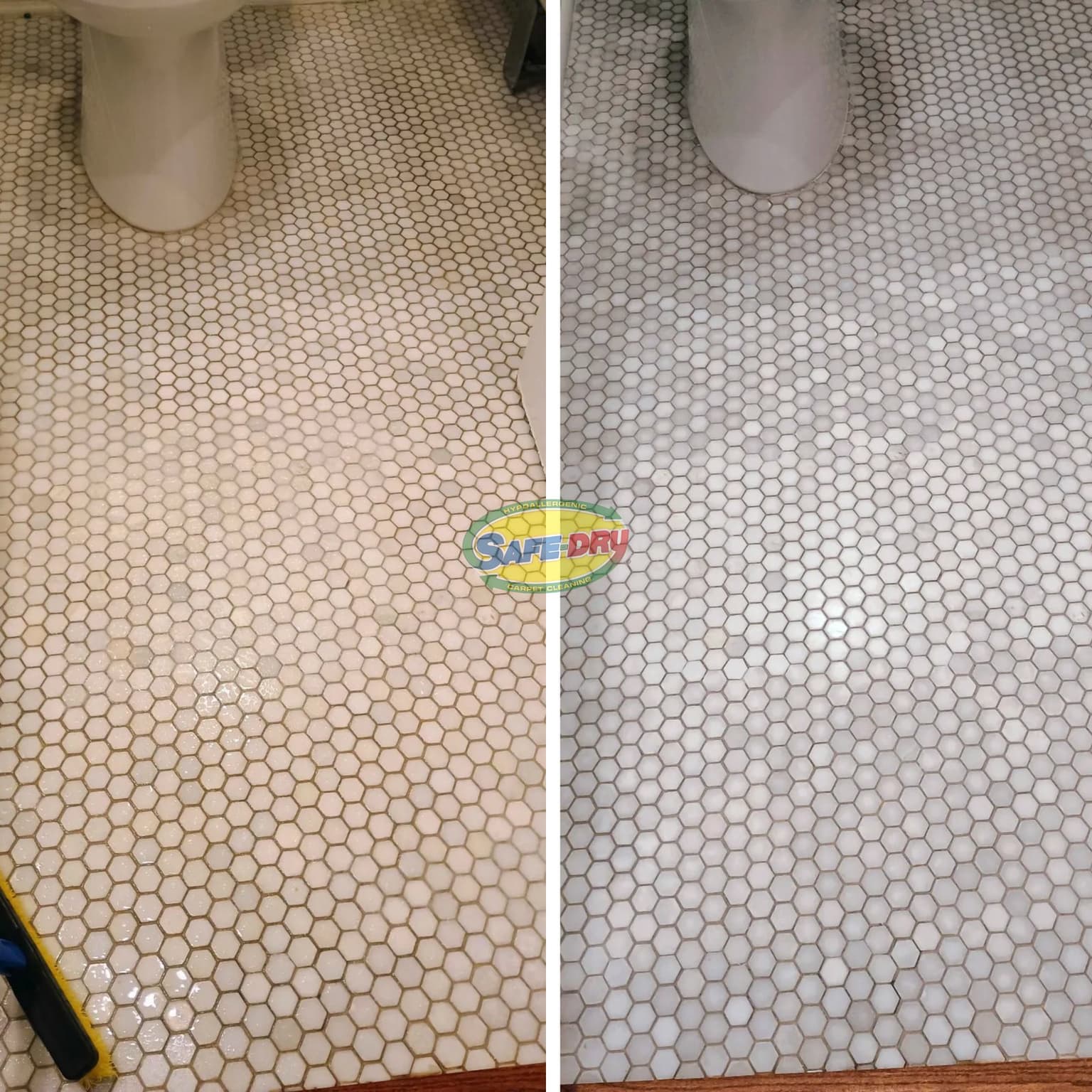
Grout is porous. Glazed tile mostly isn't. That one difference explains why a kitchen floor can look clean from across the room while the grout lines stay gray, brown, or just tired.
Grout also sits a little lower than the tile face, so every line is a small channel. Whatever runs across the floor drains into it and settles into the pores. Most people answer that by scrubbing harder. In our experience, the grout that stays lightest is the grout that gets loosened, picked up, and dried properly, and the thing darkening most Columbia grout is the mop.
The mop is doing it
You finish mopping, the floor dries, and the grout looks exactly as dark as it did an hour ago. Sometimes the tile looks cloudier than when you started. We hear that complaint more than any other about tile, and it has nothing to do with effort.
A bucket of mop water starts clean and gets dirty fast. After the first few passes you're spreading a thin wash of dirty water across the whole floor, and a good share of it runs straight down into the grout lines. When it dries, the soil stays. Textured and matte tile make it worse, because the little ridges on the surface hold dirt a flat mop head glides right over.
Floor cleaner adds a second layer. Many contain soaps or detergents, and whatever isn't picked up dries tacky. Foot traffic presses grit into that film, the floor re-soils faster, and the natural response is more cleaner next time, which means more film. Kitchens pick up cooking grease on top of that, bathrooms collect soap scum, and entries take the grit and, around here, a fair amount of red clay. The change is slow enough that you don't notice until you slide the fridge out and see how light the grout underneath still is.
You can spot film three ways: the tile feels a little tacky after it dries, it looks hazy when you sight across it at an angle, and the grout in the walk paths darkens again within days of a scrub.
Before you start
Most tile in Columbia houses is ceramic or porcelain, which puts up with a lot. Natural stone (travertine, marble, slate) doesn't. Acidic cleaners etch it and dull the finish for good, so test anything new in a closet corner first.
Look at the grout too. If it's rough, sandy, or worn low in spots, it's already more porous than it used to be and will soak up soil faster no matter how you clean it.
The routine, step by step
- Get the grit up dry. Vacuum on the hard-floor setting or run a microfiber dust mop before any water touches the floor. Mopping over grit makes a thin mud that dries right back into the lines.
- Pick a cleaner for the room. Grease in the kitchen, soap scum in the bathroom, gritty soil at the entry. Use one grout-safe product aimed at the actual problem. Stacking products builds residue.
- Let it sit. Work sections about four feet square. Apply the cleaner along the lines and give it five to ten minutes, damp but not puddled. Dwell time does the work your arm would otherwise do.
- Brush lightly. A nylon grout brush, short strokes, steady pressure. Wire brushes and scouring pads rough up grout, and rough grout holds dirt. If a line won't come clean, reapply and wait before you press harder.
- Pick up the dirty solution right away. This is the step almost everybody skips. Wipe each section with a clean microfiber towel, turning to a fresh side as you go. If you scrub the whole room and mop at the end, the grime you loosened has already dried back into the lines.
- Rinse with a light mist of clean warm water from a spray bottle, then another pass with a fresh towel.
- Dry it fast. Buff with a dry towel and turn on a ceiling fan. Our humidity slows drying, and dirty water that sits has time to settle into the pores.
If the grout looks bright while wet and darkens as it dries, there's still residue in it. Do another rinse-and-dry pass on that spot before you reach for anything stronger.
Habits that keep it light
Dry-mop the busy areas several times a week. Do most weekly mopping with plain warm water and save cleaner for problem spots. If you use a bucket, set out a second one of plain water and rinse the mop head in it between passes, and change both whenever they go cloudy. A microfiber flat mop uses less water and picks up more residue than a string mop.
Wipe near the stove, sink, and trash can more often than the rest of the kitchen. Run the bathroom fan after showers. Put mats at the doors so grit stops there.
Skip baking soda scrubs and vinegar as regular cleaners. Baking soda is mildly abrasive, and repeated vinegar weakens grout over time and damages stone. Never mix vinegar with other products.
When DIY stops working
If you're doing all of this and the grout turns dingy again in a few days, the soil is packed deeper than a hand brush reaches. That's the point to call us.
Our tile and grout cleaning uses a machine buffer. The tech looks the floor over and notes the heavy spots, pre-treats the grout to break up oil and old product, then runs the buffer, which works the solution across the tile and down into the lines to loosen what's packed in. The dirty solution gets picked up completely and the surface gets a final wipe so there's nothing left to catch new dirt. A typical house takes one to two hours depending on square footage, and the current coupon takes $45 off.
Grout that's been stained for years doesn't always come all the way back. Many old stains fade a lot, a few don't budge, and cracked or crumbling grout needs regrouting, which is a different trade. After the inspection, before any buffing starts, the tech will point out which areas are which.
Most homes do well with a professional clean about once a year, a busy kitchen or entry a bit sooner. The night before we come, clear the kitchen chairs and the dog bowls off the floor so the tech can start buffing right away. Phone bookings go through 803-310-3848.