Every March the Midlands turns yellow. Cars, porches, and patio furniture all wear a coat of pine pollen, and most people blame the outdoors for their sneezing. A good share of it is coming from the floor.
Picture where a toddler spends the day: on the carpet, hands down, face a foot off the fiber. The dog sleeps there too. Whatever is in your carpet is in the air at their level first, and a fair amount of it drifts up to yours.
How the carpet ends up holding it
Pollen rides in on shoes, clothes, dogs, and every open door. Once inside it settles into carpet alongside ordinary dust, dust mites, and pet dander, and each step pushes it deeper. Then normal life (kids flopping on the floor, the dog shaking off after a walk) kicks some of it back into the room, windows closed or not.
Carpet acts like a big filter for the house, which is fine up to a point. Particles caught in fiber aren't floating past your nose. The trouble is a filter that never gets emptied. Vacuuming picks up what's near the surface, and during pollen season it should happen two or three times a week with a good filter. It doesn't reach what's packed down near the backing. And if your vacuum puts out that warm dusty smell while it runs, it's blowing the finest particles right back out the exhaust. A well-built machine with a true HEPA filter is worth the money in a house with allergies, and a cheap one with a torn bag is close to useless.
Our humidity makes all of this worse. Damp air helps allergens cling to soft surfaces, and a lot of families here get a second round in the fall on top of the spring one.
Home cleaning can backfire, too. Rental machines leave carpet wet for hours, and in a muggy house wet carpet smells musty and can grow mold, which is an allergy trigger by itself. Store shampoos leave soap in the fiber, the soap goes sticky, and it grabs fresh dust within days.
What we do differently in an allergy household
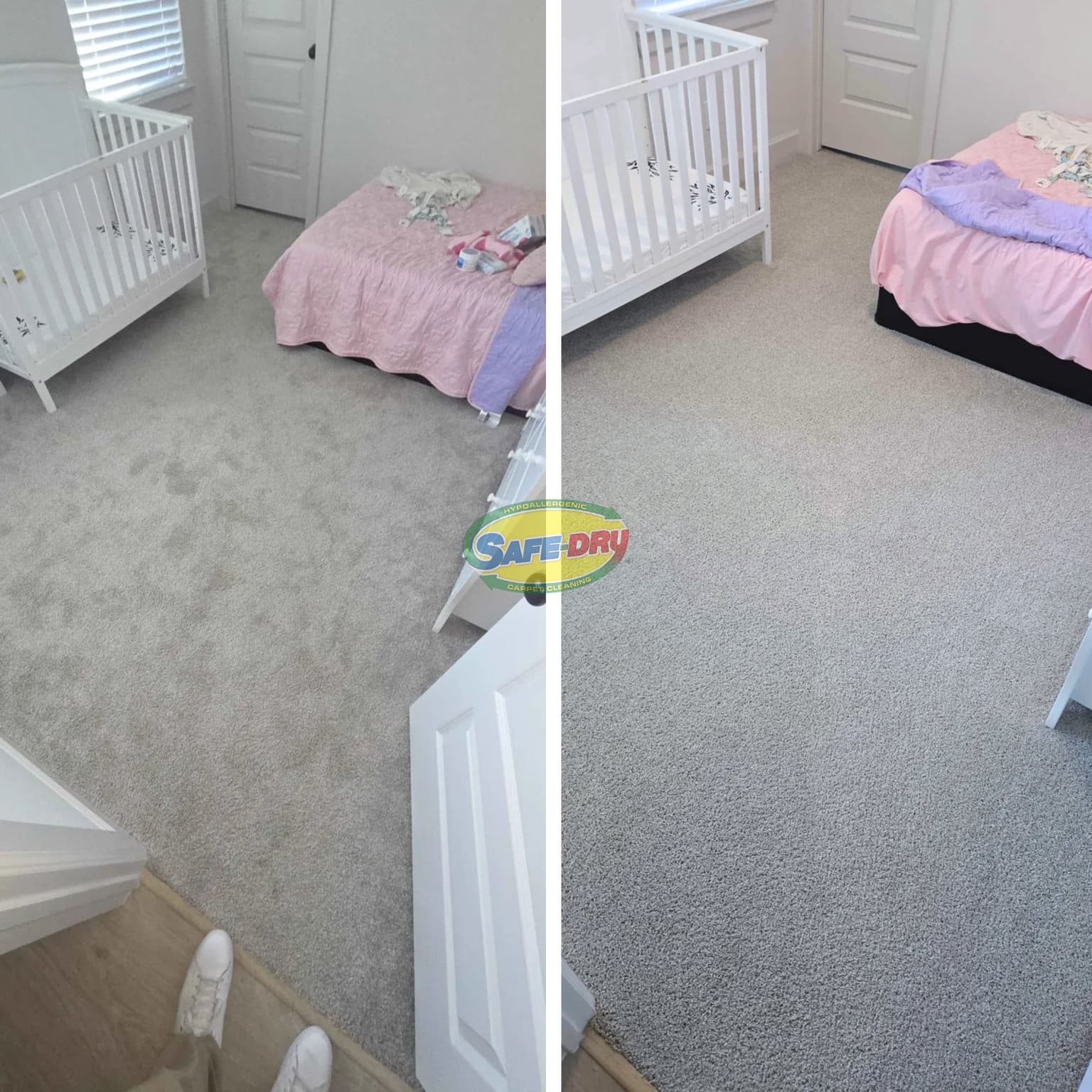
We start by walking the house with you. Entryways and the first few feet inside each door load up hardest in pollen season. Bedrooms matter more than people think, and a nursery matters most: you spend eight hours a night breathing a few feet above that carpet, and dust mites love bedrooms. The spots where pets sleep collect dander in the same few places, along with the accidents nobody saw happen. If you're prioritizing on a budget, do those rooms before the formal living room nobody uses.
The clean itself is built around two things allergy sufferers care about. First, residue. There's no soap in our solution and it's hypoallergenic, so nothing is left in the fiber to trap new dust or irritate skin. Carbonation lifts the dust, pollen, and dander off the base of the fiber so we can pull it out. Second, water. We put down very little, so most carpet is dry within sixty minutes, and mildew never gets a damp afternoon to start. Urine spots are their own job and need an enzyme treatment that gets down to the pad; we'll flag them as we go. For a new baby, someone recovering from an illness, or an older pet with accidents, our antibacterial sanitizer can be added to the regular clean.
Most homes take one to two hours. Afterward, run the ceiling fans, or open a few windows if the pollen count is low, and keep traffic light until the carpet is dry.
Carpet isn't the only soft surface in the picture. The couch collects the same dust and dander, so an upholstery cleaning on the same visit makes sense, and nicer rugs can get a rug cleaning right there in the room.
What a clean carpet can't do
Clean carpet is one piece of your indoor air, and I'd rather say that than oversell it. If the HVAC filter hasn't been changed since spring, or the bathroom never gets ventilated, the carpet can only do so much. Change filters on schedule, run exhaust fans, and keep indoor humidity in check with the AC or a dehumidifier through the muggy months. Families who do those things along with a clean carpet usually notice a difference within a week. Families who only do the carpet notice less.
Timing, and a routine you'll keep
Book early in the season, before the pollen peaks, and you start spring from a clean baseline. For most homes, a professional clean every six to twelve months works. If someone in the house has asthma or bad seasonal allergies, or there's a shedding dog, do it twice a year, spring and fall.
Between visits, vacuum the busy areas slowly and empty the canister outside. Mats go on both sides of each entry door, and the front door becomes a shoes-off zone. Brush the dogs in the yard. Small throw rugs need washing often or they turn into one more dust reservoir, and an air purifier in the carpeted room you use most is money reasonably spent.
Our work carries a 100% satisfaction guarantee. If a room disappoints you, we come back.
When you book (803-310-3848, or the online scheduler if you'd rather not call), tell us who in the house has allergies and where they sleep. We'll do that bedroom and the entry carpet first, since that's where most of the season's pollen ends up.